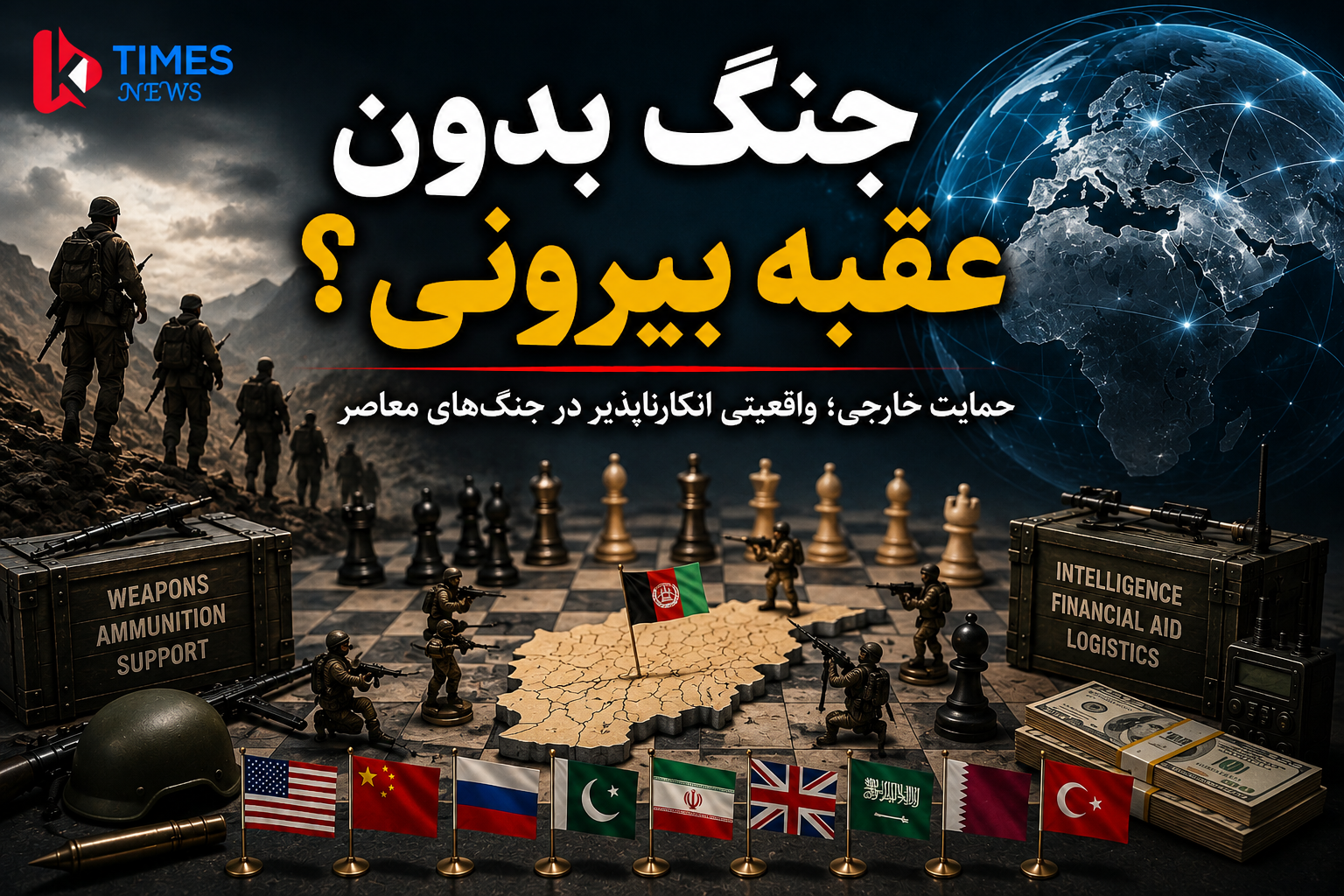
War without external support?
Analysis | Kabul Times News
The debate over the role of external support in the success or failure of armed movements is one of the important topics in the studies of war, politics, and international relations. A number of critics accuse the Afghan Liberation Front of having an “external support” in various countries; however, a review of historical examples shows that almost no armed or liberation movement in the world has been able to survive for a long time or achieve its goals without some kind of external support.
In the Vietnam War, the liberation forces enjoyed the political, military, and economic support of China and the Soviet Union. In addition, the widespread opposition of American public opinion and the support of anti-war movements in Europe also played an important role in changing the equations of the war.
In Afghanistan, during the Soviet occupation, in addition to having logistical bases in Pakistan and Iran, the Mujahideen benefited from financial and military aid from various countries, including the United States, China, Egypt, and a number of Arab countries. Many analysts believe that without this support, it would have been very difficult to continue the war against the Soviet army.
On the other hand, the Taliban also had regional support networks during the war with the former Afghan government, according to many international reports and analyses; a topic that has always been discussed at the international level.
Similar examples can be seen in other parts of the world. The end of foreign support for the "Tamil Tigers" in Sri Lanka, along with the political isolation of this group, is considered one of the important factors in its defeat after years of armed conflict. Many independence movements in Africa would not have been able to continue the fight without foreign support.
Even governments are unable to carry out major conflicts alone in modern wars. Contemporary wars have shown that military powers need the cooperation of their allies to provide equipment, technology, information, financial resources and diplomatic support.
From this perspective, Afghanistan is not isolated from the geopolitical realities of the region. The country is located in the neighborhood of several regional powers, and any political or military development will inevitably be influenced by regional and international relations.
Ultimately, what matters most is how these relations are managed. Preserving national interests, independence of decision-making, accurate knowledge of international relations, and avoiding dependency are among the most important principles that any political or military current must consider in interacting with foreign actors.
This note reflects the author’s perspective and does not necessarily reflect the editorial position of Kabul Times News.
Author: Homayoun Tander
War without external support?