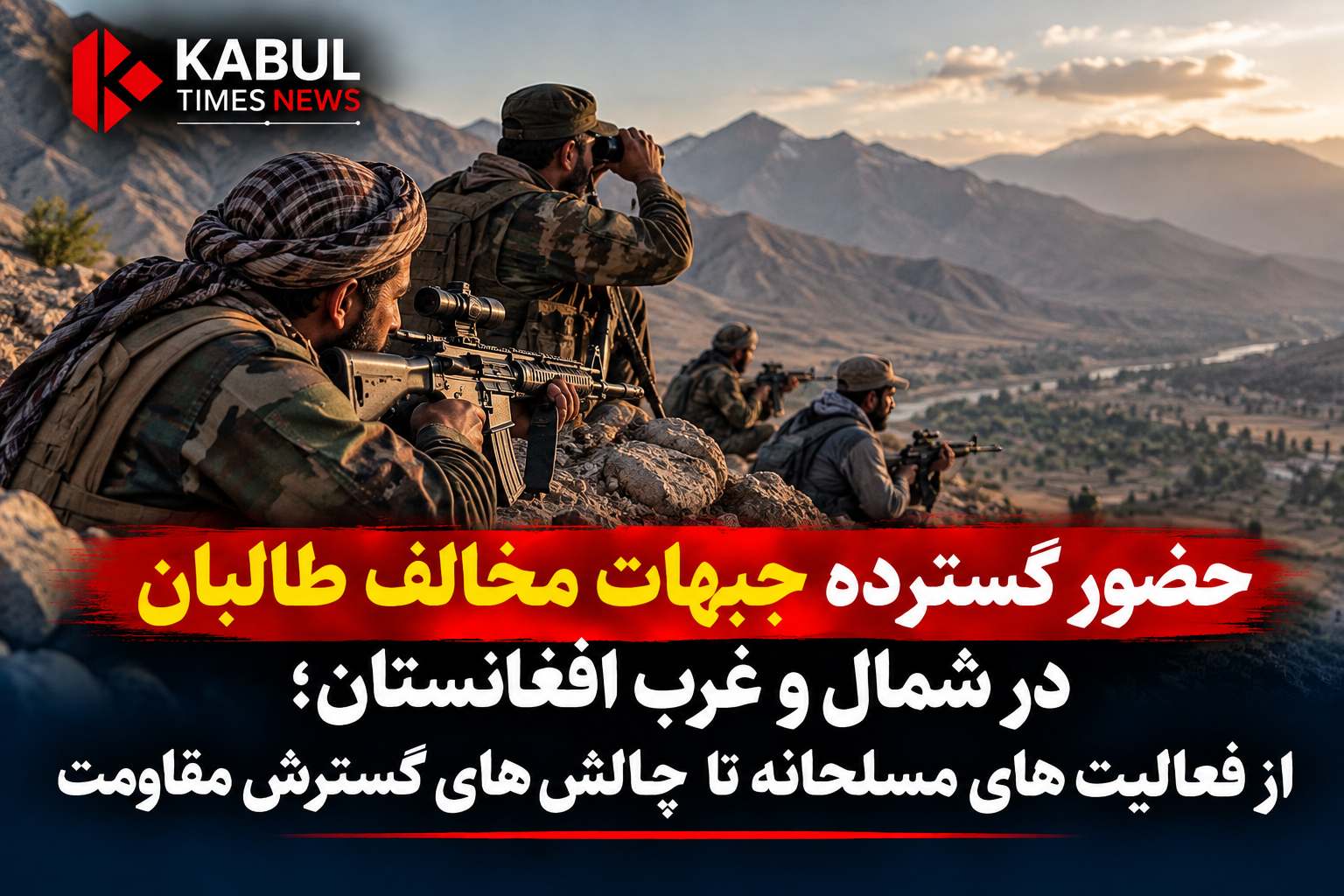
Northern and Western Afghanistan: What Is the Extent of the Influence and Operational Capability of Anti-Taliban Fronts?
Analytical Report: Shahpour Nayebzadeh
Following the Taliban’s return to power in Afghanistan in August 2021, several groups opposed to the movement—each with distinct political and military approaches—have either continued their operations or established new organizations. In this context, northern and western Afghanistan are significant for assessing the potential of anti-Taliban forces, given their geographical location, history of political and military resistance, and local social structures.
However, a fundamental question remains: have the activities of these groups evolved into a widespread and sustained presence in these regions, or do they still rely primarily on sporadic attacks and limited organizational or media-based activities?
Northern Afghanistan: A History of Resistance and Local Potential
Throughout various periods of modern history, northern and northeastern Afghanistan have served as key hubs for the country’s political and military developments. The legacy of past conflicts, the presence of local commanders, and the existence of established social and political networks are all critical factors when analyzing the potential for organized opposition against the Taliban.
Provinces such as Baghlan, Takhar, Badakhshan, and Panjshir—along with parts of Kunduz and Samangan—are particularly relevant when examining the activities of anti-Taliban groups, owing to their geographical positioning and political history.
Prominent anti-Taliban entities include the National Resistance Front of Afghanistan (NRF), led by Ahmad Massoud, and the Afghanistan Freedom Front (AFF). These groups have declared their opposition to Taliban rule and have adopted both political and armed struggle as methods of resistance. However, these groups do not constitute a unified entity under a single command; they differ in terms of political objectives, organizational structure, operational methods, and capabilities. Furthermore, the mere presence of multiple opposition factions does not necessarily imply operational coordination or extensive influence within a given region.
Western Afghanistan: Limited Activity and the Need for Independent Evidence
Due to their distinct geographical, economic, and social characteristics, the provinces of Herat, Farah, Badghis, and Ghor present a different situation compared to northern and northeastern Afghanistan.
When examining the activities of anti-Taliban opposition groups in these areas, it is essential to distinguish between the occurrence of armed attacks, the existence of organized networks, social influence, and territorial control. A single attack does not, in itself, prove the sustained presence of a group or its capacity to control a territory.
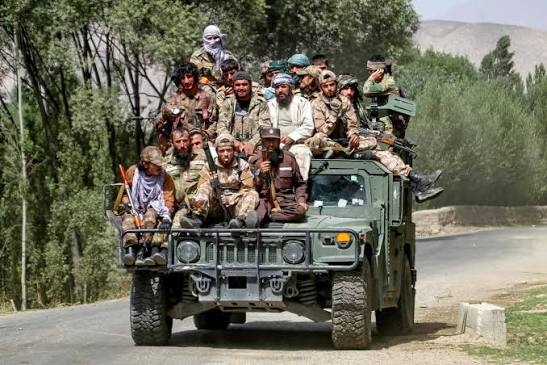
According to information presented in this report, there have been recent accounts of guerrilla-style attacks targeting military vehicles in Herat and Ghor provinces. However, a precise assessment of the scope of these activities—including the timing and location of incidents, the identity of those responsible, and specific details—requires verification from independent sources.
Challenges to Expanding the Resistance
A significant challenge facing anti-Taliban opposition factions lies in the disparities among their structures, objectives, and operational methods. The degree of coordination between these groups, their access to local networks, and their capacity to sustain operations over the long term are all factors that can influence the extent of their reach.
Moreover, information regarding armed conflict in Afghanistan is sometimes disseminated by the parties involved for political or propaganda purposes. The Taliban may emphasize their success in maintaining security, while opposition groups may focus on highlighting their own military achievements. Consequently, relying on statements from a single side—without independent verification—can result in an incomplete picture of the situation.
The Impact of Opposition Activity on the Security Situation
The activities of armed opposition groups can influence the Taliban’s security calculations, troop deployments, and control policies; however, the intensity and scope of this impact must be assessed based on concrete evidence.
Compared to northern Afghanistan, the reported activity of anti-Taliban fronts in the western part of the country appears less pronounced. Nevertheless, drawing definitive conclusions regarding the extent of the presence and operational capabilities of these groups requires further field data and independent sources.
Overall, the history of resistance in the north, combined with reports of sporadic attacks in western Afghanistan, indicates that opposition to the Taliban persists in various forms. However, determining the level of influence, cohesion, and potential for expansion of these groups requires a rigorous examination of the evidence, as well as the ability to distinguish media claims from verified facts.
Shahpour Nayebzadeh
Northern and Western Afghanistan: What Is the Extent of the Influence and Operational Capability of Anti-Taliban Fronts?