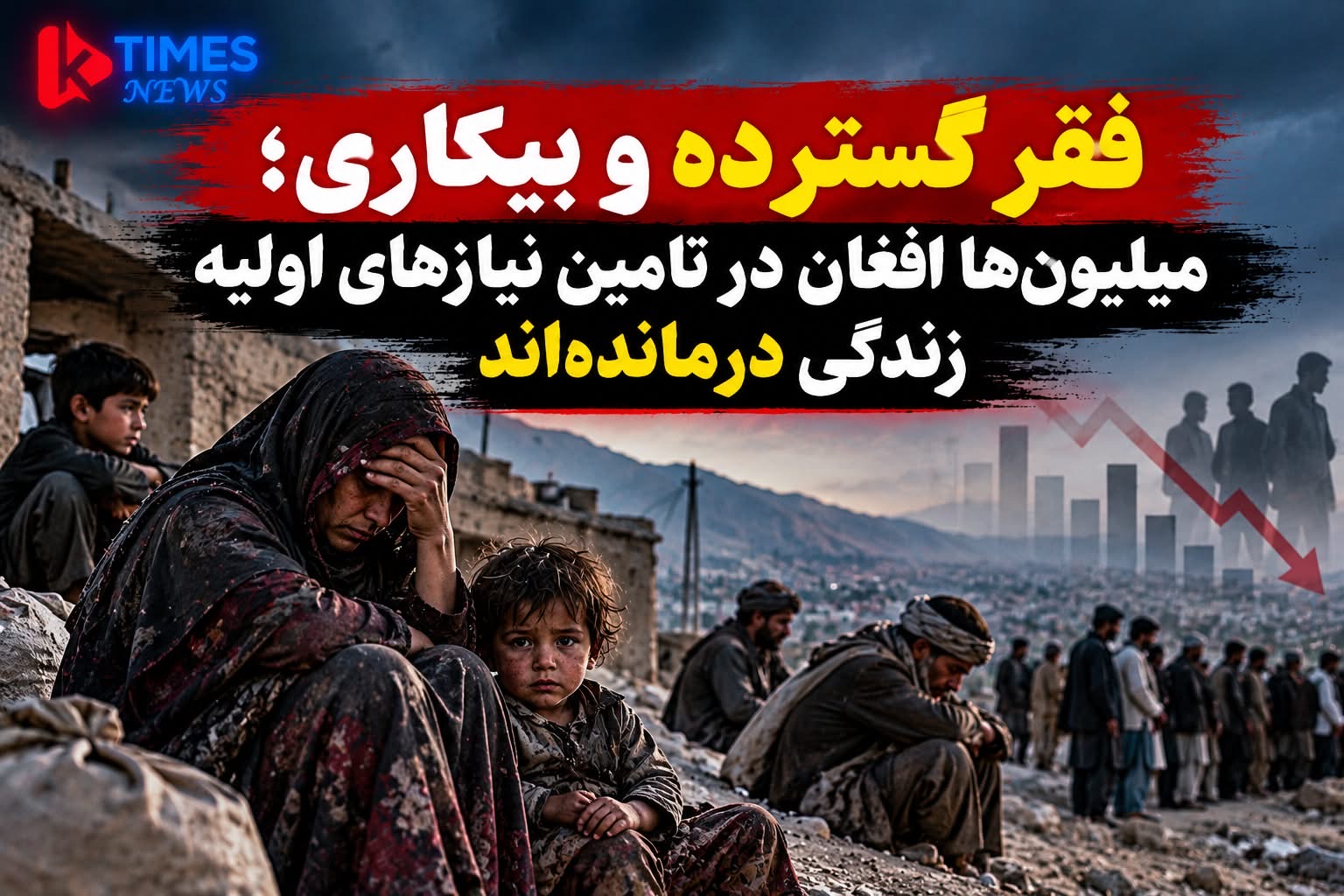
According to a recent report by the United Nations Development Programme (UNDP), around 28 million people in Afghanistan in 2025, equivalent to 74 percent of the country’s population, were unable to meet their basic needs. The report shows that despite limited economic growth, poverty remains one of the major challenges facing the people of Afghanistan.
According to World Bank data, the unemployment rate in Afghanistan in 2025 was approximately 13.4 percent, based on modeled estimates from the International Labour Organization (ILO). However, this figure alone does not capture the full extent of underemployment, informal employment, and the lack of adequate job opportunities.
Meanwhile, the World Food Programme (WFP) has warned that more than 17 million people in Afghanistan faced acute food insecurity during the winter of 2025. Declining humanitarian assistance, drought, the return of migrants, and limited livelihood opportunities are among the factors increasing economic pressure on families.
Economic experts emphasize that creating sustainable employment opportunities, supporting domestic production, expanding economic activity, and providing job opportunities for young people could play an important role in reducing poverty and improving the livelihoods of Afghan families.
Rising Poverty and Unemployment in Afghanistan: Millions Facing Economic Hardship