The Rapprochement Between Ahmad Massoud and Salahuddin Rabbani: Why Is Atta Muhammad Noor Concerned?
Political-Analytical Report – Kabul Times News
Reports have emerged regarding a meeting in Turkey between Ahmad Massoud, leader of the National Resistance Front of Afghanistan, and Salahuddin Rabbani, leader of the Jamiat-e-Islami party.
According to these reports, the two sides held discussions for approximately two hours, reaching an understanding regarding developments in Afghanistan, the status of anti-Taliban factions, and the necessity for greater coordination among the political and military groups opposed to the Taliban.
It is reported that the primary focus of the discussion was to foster coordination among anti-Taliban forces and to work toward forming a more cohesive front against the Taliban regime.
Should this understanding evolve into practical and sustained cooperation, it could represent a significant shift in the political landscape of the anti-Taliban opposition, given that both Ahmad Massoud and Salahuddin Rabbani command distinct networks and political bases within the opposition. The Reaction of Atta Muhammad Noor
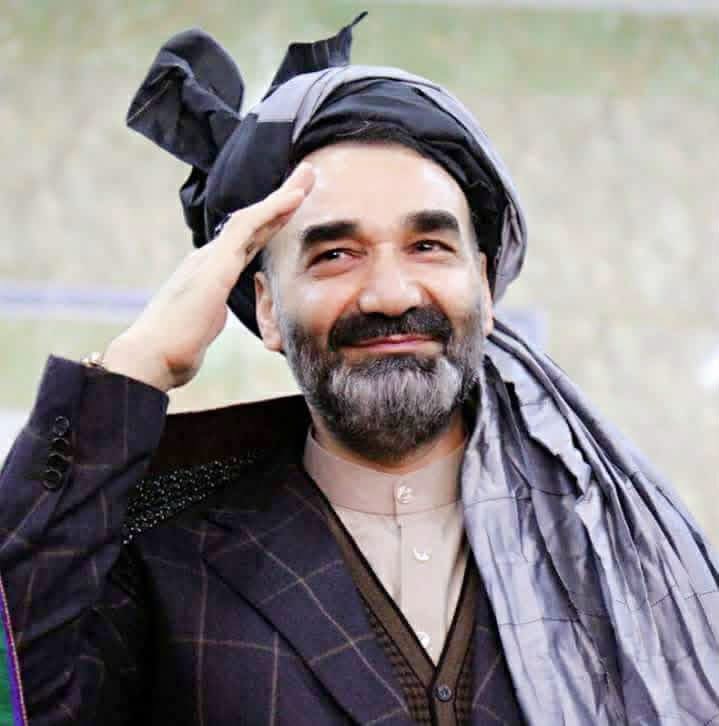
In the wake of these developments, the reaction of Atta Muhammad Noor—a highly influential figure within Jamiat-e-Islami—has drawn significant attention. Mr. Noor has emphasized that Jamiat-e-Islami is not subject to the influence of any other individual or faction, and that the organization’s decisions will not be dictated by outside parties.
This stance should be viewed within the context of long-standing internal disputes regarding the leadership and structure of Jamiat-e-Islami.
In recent years, Jamiat-e-Islami Afghanistan has grappled with internal divisions and fragmentation. On one hand, Salahuddin Rabbani asserts his position as the leader of the party; on the other, Atta Muhammad Noor maintains his own independent political network, influence, and organizational structure.
Consequently, any move by Rabbani to align himself with Ahmad Massoud could shift the balance of power among the various factions within Jamiat.
In other words, Atta Muhammad Noor’s apparent concern does not necessarily stem from opposition to the struggle against the Taliban. Rather, his primary apprehension likely concerns the distribution of power, political leadership, and the specific role each faction will play in Afghanistan’s future.
If reports regarding an agreement between Ahmad Massoud and Salahuddin Rabbani are accurate, this collaboration could represent a significant political development for Atta Muhammad Noor.
A potential alliance between Ahmad Massoud and Salahuddin Rabbani could give rise to a new political axis, in which two major anti-Taliban factions coordinate their actions.
Such a scenario could diminish Noor’s political influence in future power dynamics—particularly if this partnership succeeds in garnering support from other prominent anti-Taliban political and military figures. From this perspective, the statement that "Jamiat-e Islami is not influenced by anyone" can be interpreted as a political message—one intended to emphasize the group's autonomy in decision-making and to prevent the close relationship between Rabbani and Massoud from affecting Jamiat’s political structure or stance.
Beyond political disagreements, another issue concerning Atta Muhammad Noor has frequently surfaced in recent years: allegations and discussions regarding his wealth, real estate holdings, residential developments, and assets in Afghanistan. Noor has rejected these allegations on various occasions. Regarding certain properties and projects attributed to him, he has explained that ownership actually lies with investors, government entities, or other individuals.
Therefore, one cannot—without presenting credible documentation—claim that Noor’s recent reaction to the growing closeness between Ahmad Massoud and Salahuddin Rabbani stems from a fear that his own assets might be exposed.
Nevertheless, one point is noteworthy: in previous instances, Noor has frequently responded to accusations and political attacks, at times even threatening to reveal details regarding the activities, financial sources, and behind-the-scenes dealings of other anti-Taliban figures.
This has led some observers to interpret his recent remarks not merely as a political disagreement, but as part of a broader rivalry among the leaders of the anti-Taliban factions.
In fact, his threats to make disclosures may serve primarily as a political deterrent—a message to his rivals that if attacks against him persist, he, too, will release information concerning their activities and associations.
On the other hand, the issue of properties and assets could indeed be a genuine concern for him; if brought to light—whether internationally or within Afghanistan—it could be leveraged as a tool of political pressure against him. However, further documentation and evidence would be required to substantiate this hypothesis.
The potential rapprochement between Ahmad Massoud and Salahuddin Rabbani could alter the internal dynamics of the anti-Taliban factions. Should this cooperation evolve into a formal coalition, it might establish a new center of gravity among the opponents of the Taliban.
In this context, Atta Muhammad Noor’s reaction is perhaps best analyzed through the lens of a struggle for leadership, political influence, and the future of the Jamiat-e-Islami party.
At the same time, the history of internal divisions within Jamiat-e-Islami, and... Furthermore, the sensitivity surrounding the issue of assets—compounded by his previous threats to make disclosures—has added further dimensions to the matter.
Consequently, it can be argued that Noor’s primary concern likely pertains to a potential shift in the balance of power among the Taliban’s opponents, as well as a diminution of his own role within the future structure of Jamiat-e-Islami and anti-Taliban coalitions; the issue of assets and the prospect of disclosures, meanwhile, may serve as a secondary, yet sensitive, factor in this political rivalry.
Important Note: The occurrence of a two-hour meeting and the existence of a specific agreement between Ahmad Massoud and Salahuddin Rabbani should—pending the release of documentation or independent verification from credible sources—be regarded as "reported information" rather than established fact.
The Rapprochement Between Ahmad Massoud and Salahuddin Rabbani: Why Is Atta Muhammad Noor Concerned?