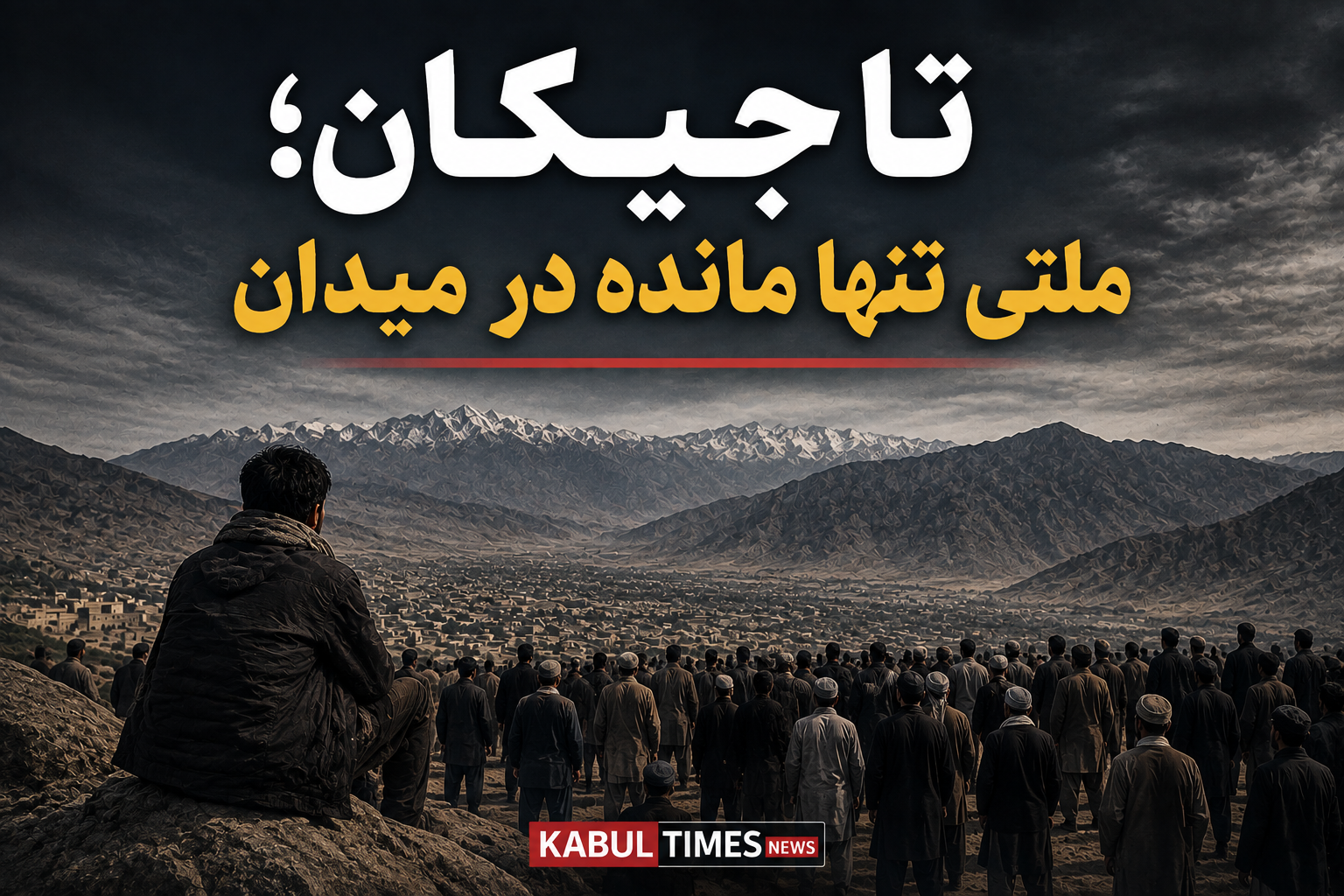
Tajiks: A Nation Left Alone in the Field
Today, Afghanistan’s Tajiks are facing several fundamental crises:
1. The global crisis
2. The regional crisis
3. The internal crisis
4. The top-down approach
5. The failure to understand the suffering of the people
6. The failure to understand major political and regional trends
7. The lack of a common strategy
8. The difficulty of establishing unified leadership
1. The Global Crisis
At the global level, it appears that no major power is willing to provide serious political support to Afghanistan’s Tajiks. Supporters of this view argue that major powers prioritize their strategic interests over historical and ethnic ties.
The fragmentation of the historical geography of Tajik communities among Tajikistan, Uzbekistan, Afghanistan, and Iran is also regarded by some analysts as part of broader historical and geopolitical developments in the region.
2. The Regional Crisis
At the regional level, many actors prioritize their own national interests and are unwilling to put their relations with major powers or neighboring countries at risk because of ethnic ties with the Tajiks.
From this perspective, expecting broad regional support without taking the interests of neighboring countries into account is neither realistic nor sustainable.
3. The Internal Crisis
Political and social divisions dating back to the years of jihad have not been fully healed. These divisions continued throughout the republican period and have deepened in recent years.
The past five years have shown that a large part of society is no longer willing to mobilize solely around the traditional formulas and structures of the past. The younger generation is demanding a greater role in political and social decision-making and the emergence of movements that reflect present-day realities.
4. The Top-Down Approach
One of the major problems within Tajik society, according to the author, is the persistence of a top-down mentality among some political figures.
Some still consider themselves the undisputed leaders of the people and expect society to follow them without question, while the circumstances of today have fundamentally changed.
A genuine leader is someone who stands with the people during difficult times, understands their concerns, and works to find practical solutions. Social legitimacy is not something that remains permanently attached to an individual or political group.
Effective leaders must adapt themselves to new circumstances, the younger generation, and contemporary political developments. Ideas based solely on the experiences of the past four decades are not sufficient to address today’s challenges.
5. Failure to Understand the People’s Suffering
It appears that some former political leaders have failed to adapt themselves to the realities of people’s lives.
Over the past five years, many Afghans have faced poverty, migration, unemployment, social restrictions, and insecurity. Yet the response of some political figures has largely been limited to statements, condolence messages, and occasional political positions.
Today’s society needs more than speeches; it needs practical programs, accountability, and genuine engagement with the people.
6. Failure to Understand Major Trends
Another problem is the weakness in understanding major political and regional developments. No power in international politics operates solely on the basis of permanent friendship or hostility. Ultimately, strategic interests are what shape the policies of states.
Therefore, assuming that major powers will always support a particular movement or ethnic group can be dangerous and unrealistic.
7. The Need for Civil and Political Organization
Under the current circumstances, Tajiks need an internal, civic, and political strategy more than ever.
Young people in each province can come together through civil, social, and political institutions, identify the concerns of local communities, and work to establish networks of cooperation among the provinces.
The experience of previous generations can also be combined with the energy and knowledge of young people to create a coherent, accountable political movement rooted in the will of the people.
8. Comparing the Afghan Conflict with Palestine
According to the author, some aspects of the current developments in Afghanistan can be compared with the historical evolution of the Palestinian conflict. However, Afghanistan and Palestine have fundamental differences in their historical, political, and social circumstances.
Such a comparison is primarily made from the perspective of population displacement, conflicts over power and territory, and the role of foreign actors, and requires careful historical and political examination.
9. The Difficulty of Establishing Unified Leadership
Given the depth of internal divisions, establishing unified leadership for all Tajik political and social currents also faces serious challenges.
Instead of waiting for a single leader to emerge, greater emphasis could be placed on building networks of intellectuals, young people, civil society activists, and political figures at the provincial level. These networks could then work toward reaching agreement on shared principles and objectives.
Such an approach could help prevent a repetition of past divisions and create greater opportunities for public participation in Afghanistan’s political future.
Final Note
Further delay and self-interest cannot continue to meet the expectations of the younger generation. Afghanistan has reached a point where it needs serious reconsideration of its models of leadership, political organization, and the relationship between political elites and the public.
If political movements fail to move beyond past divisions and present a common civic and political vision for the future, the crisis of mistrust and frustration within society will continue.
The way forward lies not in repeating the patterns of the past, but in developing a new political discourse, expanding youth participation, strengthening civil organization, and reaching political understanding among different groups.
Tajiks: A Nation Left Alone in the Field