Secret War over the Future of the Middle East!
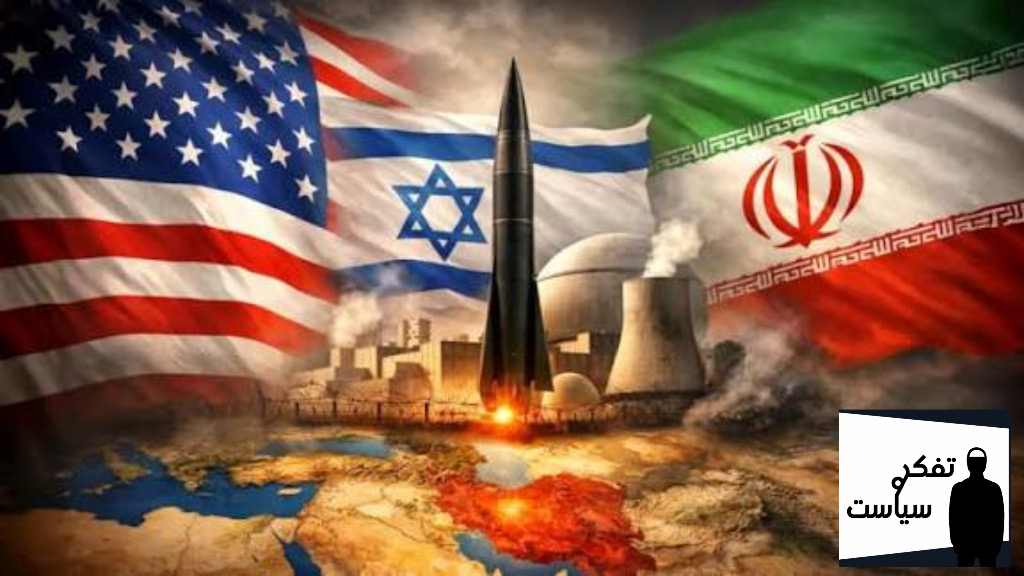
During the days when political talks between Iran and the United States were underway, military attacks by the United States and the Jewish regime on targets inside Iran began. This event showed that the atmosphere of negotiations has not been able to prevent the continuation of military confrontation. The new operation is in fact a continuation of tensions that remained semi-silent after the intense clashes of 2025 and the temporary ceasefire between Iran and the Jewish regime.
To understand these events, it must be examined within the framework of America's larger plan for the region. Washington has been seeking to rearrange the political and security structure of the Middle East for years; a plan whose main goal is to create a safer environment for the Jewish regime and reduce the power of actors who can change the balance of power against it. In such a framework, limiting regional powers, especially in the missile and nuclear fields, is of particular importance.
Iran is among the countries that have had a complex position in this equation. On the one hand, at some historical points, it has moved within the framework of US policies in the region and has even acted in line with Washington's goals in some cases, but on the other hand, its military capabilities and regional influence have always made it considered a controllable factor. For this reason, pressure to reduce Iran's military and security capabilities has increased in recent years.
The US demands have mainly focused on three axes: curbing its missile program, limiting its nuclear activities, and reducing Iran's role in its allies' regional networks. From Washington's perspective, achieving these goals could change the balance of power in the Middle East in such a way that the Jewish regime's supremacy is consolidated and regional governments can more easily move towards normalizing relations with it.
However, the negotiation process showed that the gap in views is still wide. Iran was trying to control the atmosphere of tension and prevent a large-scale war through economic concessions and some temporary restrictions on its nuclear program. In contrast, the United States wanted deeper changes in Iran’s military power structure, an issue that Tehran saw as a significant loss of deterrence.
In such circumstances, the military option was used as a means of pressure. The attacks were mostly aimed at sensitive infrastructure and key military figures, an action that was seen as aimed at weakening Iran’s strategic capabilities and increasing political pressure on its leadership. Despite some speculation about regime change, historical experience has shown that such an objective is usually not achieved through limited air or naval operations and is more often used to influence the political calculations of the other side.
Iran’s reaction also showed that the conflict could take on regional dimensions. Missile and drone attacks on targets in territories controlled by the Jewish regime and some American bases in the region were a clear message to Washington’s allied governments: continuing the war could affect the security of the entire region. Such messages are usually sent with the aim of exerting political pressure on the United States and forcing it to return to the political path.
The importance of this crisis is not limited to the confrontation of two or three actors. Due to its geographical location next to the Persian Gulf and the Strait of Hormuz, Iran is located in one of the most sensitive parts of the world; where a large part of the global energy transport passes through it. For this reason, any instability in this region can have consequences beyond the borders of the Middle East.
In recent decades, Islamic lands have repeatedly been the scene of foreign interventions and wars; from Afghanistan and Iraq to Libya and Syria. The experience of these countries shows that the competition of great powers has often led to long-term instability. The current crisis can also be understood in the same historical context.
Ultimately, the future of this confrontation depends on the decisions made by the main actors. Iran is faced with a difficult choice: continue to resist pressure or try to reach an agreement that can prevent the spread of war. Whichever path is chosen, it will undoubtedly have a profound impact on the political and security equations of the Middle East in the coming years.
Secret War over the Future of the Middle East!