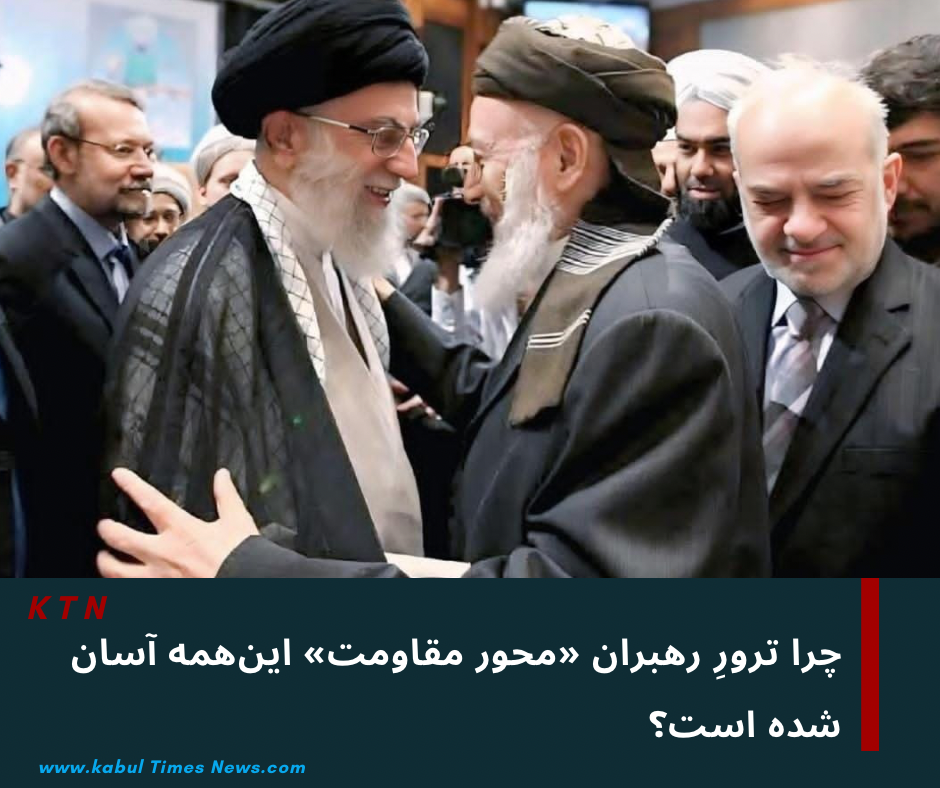
After the assassination of Hassan Nasrallah, Ali Khamenei, Ismail Haniyeh, and a series of commanders who came before them, this question imposes itself with a disturbing intensity:
Why does this tragedy keep happening?
How does Israel manage to assassinate the highest levels of leadership time and time again, even though everyone knows they are within striking distance?
The answer should not be sought simply in intelligence superiority; the problem is a deep, structural flaw within the “axis of resistance” system.
After the 2006 war, Israel undertook a fundamental overhaul and, for nearly twenty years, focused its intelligence apparatus on drawing a comprehensive map of Hezbollah and Iran, using artificial intelligence to track patterns and networks, not just tracking movements. “Operation Pager” reveals the depth of this infiltration: ten years of planning for a security measure taken by the enemy to become a solid trap.
In contrast, Iranian leaders and their allies still think with yesterday’s security logic: hiding in an underground bunker, narrowing the circle of those around them, constantly moving their residence…
But a bunker twenty meters deep no longer makes sense when the enemy knows the exact coordinates.
And these coordinates do not come from space; they come from within the closest circle of the leaders’ assistants.
Herein lies the fundamental error: human infiltration and betrayal.
And this phenomenon is not unique to ideological systems; history shows that Western liberal systems have also experienced great betrayals at the highest levels of their intelligence services.
Betrayal is a human phenomenon; Wherever incentives like money, pressure, or resentment are available, they will go.
But regimes that close the door to internal criticism and over-stretch the inner circle accumulate silent resentments and weaken early detection mechanisms.
Most striking of all is the lack of adaptation and learning over the years:
Qassem Soleimani was assassinated in 2020; then Ismail Haniyeh was targeted in the heart of Tehran in 2024—a blow that showed that infiltration had reached deep into Iran; then Hezbollah military commanders, then Hassan Nasrallah, and then a number of Iranian commanders and scientists in the 2025 war; and finally Ali Khamenei and his top advisers were targeted in his private home, in the first moments of the war.
Ismail Haniyeh’s assassination was the most telling: a man martyred inside an IRGC facility in the Iranian capital; If there is no security there, then where is the security?
Yet the protocols have not fundamentally changed.
What is happening is a structural and integrated crisis:
Outdated protocols against digital warfare; infiltration at the highest levels that extends deep into Iran; and a culture that makes it difficult to rethink the security apparatus.
It is clear that the enemy now reads this apparatus better than it does itself.
Analysis