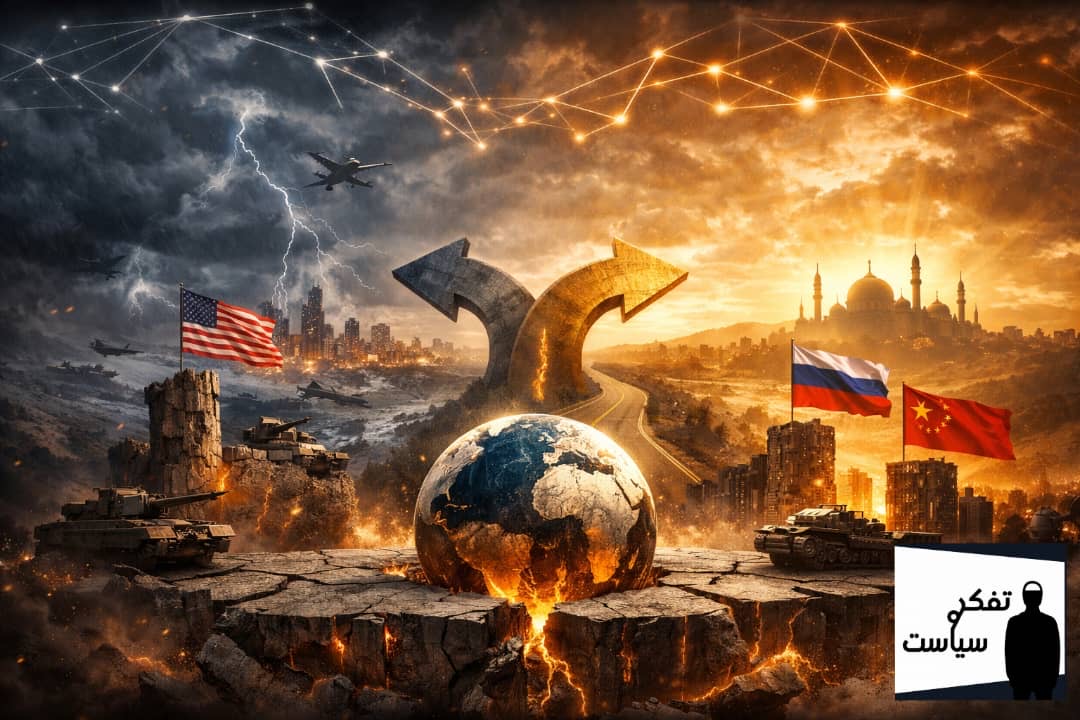
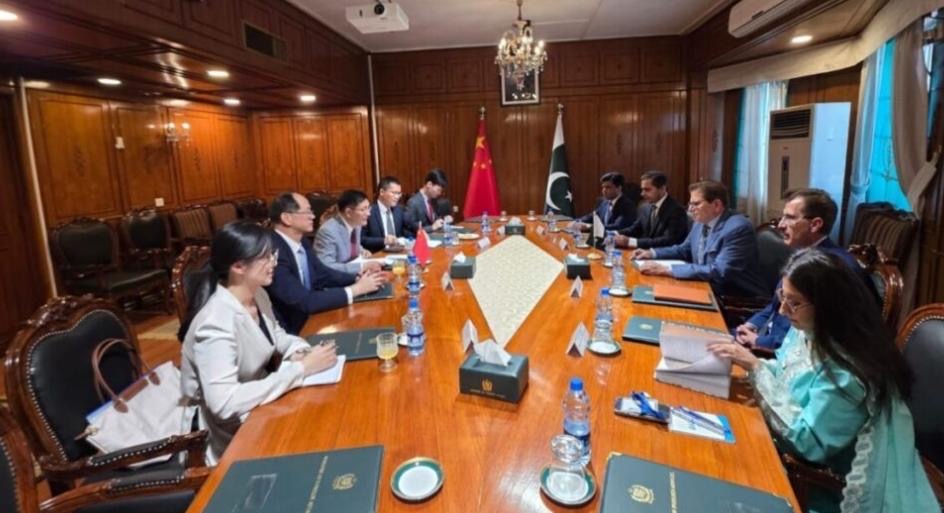
The question of the future of global order is no longer a mere theoretical debate; it has become an analytical necessity for understanding current developments in the world. The order that was formed after the Cold War on the axis of the superiority of one power is now facing gradual erosion and clear signs of transition can be seen in it.
However, this transition is neither simple nor transparent; rather, it is complex, multi-layered and accompanied by ambiguity.
1. The gradual collapse of the unipolar order!
The previous order was based on the concentration of power in the hands of a major player, but this situation is no longer sustainable.
The relative decline of American power and the simultaneous rise of powers such as China show that the world is moving from the concentration of power to its distribution.
In this situation:
The old order is no longer capable of fully managing the world
But the new order has not yet been formed
This “transitional phase” is inherently unstable and tense.
2. Moving towards multipolarity; but without certainty!
One of the prominent scenarios is the world moving towards a multipolar order; where several great powers play a role simultaneously.
However, this multipolarity does not mean stability; rather, it makes competition more complex and prediction more difficult.
In such an order:
Coalitions are not fixed and permanent
Competitions are fluid and variable
Decisions are based on sectional interests.
3. Changing the behavior of states; from dependence to balance!
One of the important developments is the change in the behavior of states—especially emerging and regional states.
These states no longer desire absolute dependence on one power;
Rather, they seek to establish balanced relations with several powers simultaneously.
The goal of this approach:
Reducing political and economic pressures
Avoiding the costs of unilateral dependence
Increasing the margin for maneuver in foreign policy
As a result, the world is moving towards a kind of "active balancing".
4. The true nature of great power competition!
Despite the widespread tensions between the United States, China, and Russia, the main nature of this competition is not ideological; rather, it is based on:
Material interests
Political influence
Control of resources and markets
.
Despite their differences, these powers move within a common general framework, which is to maintain the general structure of the existing order.
For this reason, their competition is more about "sharing power" than "fundamental change in the world order".
5. Hidden challenge; ideological alternative and concern of the powers!
Alongside the obvious competition between the great powers, there is also a deeper layer of confrontation: the fear of the emergence of an ideological alternative to the existing world order.
Great powers such as the United States, China, and Russia, despite their serious differences, have one thing in common:
preserving the general framework of the existing order even as it is eroding.
These states know very well that Muslims are not just a demographic group;
but rather, they are the bearers of a historical experience of governance spanning more than a thousand years—an experience in which a different order based on justice, values, and an independent worldview was formed and has been able to lead a large part of the world.
This same history makes the Islamic world—if it awakens and unites—a real and potential alternative to the existing order;
an alternative that goes beyond material interests and is based on a framework of values and civilization.
From this perspective:
The competition between great powers is, at a deeper level, tied to the maintenance of the existing order
And any force that can challenge this order is seen as a threat
In this same framework, many regional conflicts—especially in the Middle East—can be analyzed beyond the usual political conflicts;
These conflicts, in some cases, are aimed at curbing the capacities of the Islamic world and preventing it from becoming an independent and influential actor.
Summary and final message: The world is on the verge of redefining power!
Today's world is neither in complete collapse nor in a state of stability;
But it is in a transition phase—a transition from the concentration of power to its distribution.
But this transition also reveals an important reality:
The multipolarization of the world does not necessarily mean a fundamental change in the global order;
It could simply be a redistribution of power within the same dominant framework.
Meanwhile, what can change the equation is not simply the competition of powers, but the emergence of an intellectual and civilizational alternative.
For the Islamic world, this situation is both a warning and an opportunity:
A warning against continued fragmentation and passivity
And an opportunity to return to its historical role, based on unity, brotherhood, and awareness
Because in a world where powers compete over material interests,
What can change the course of history is an idea that brings people together, not just interests that divide them.
*The Future of Global Order; Where is the World Going?*