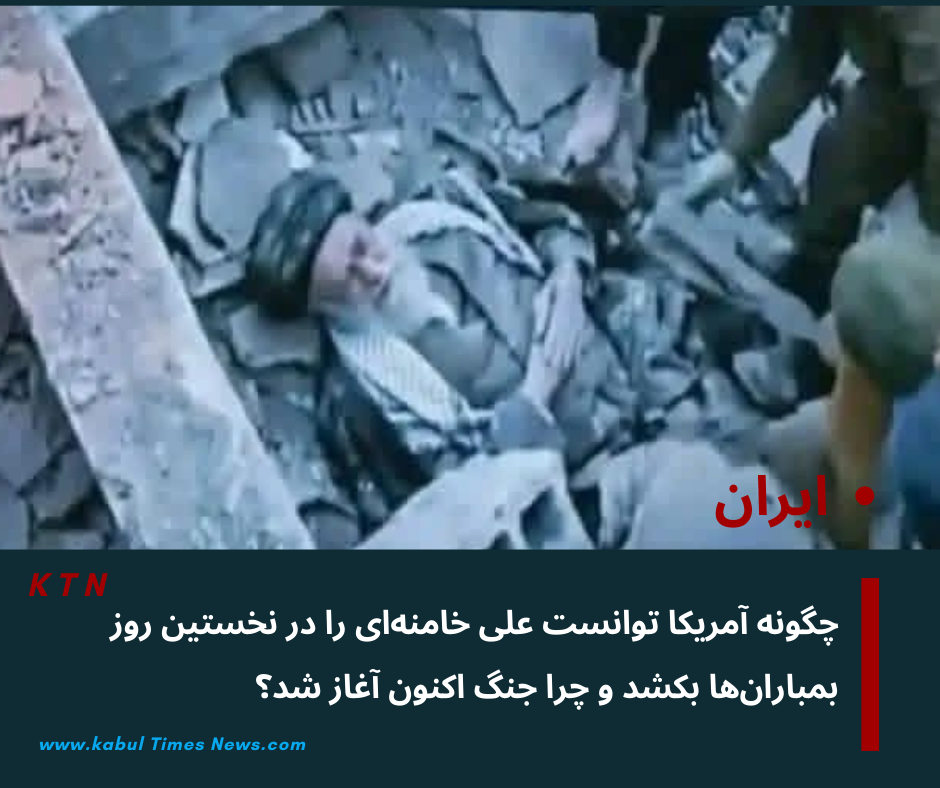
How did the US manage to kill Ali Khamenei on the first day of the bombings, and why did the war start now?
The new major war between the US and Israel against Iran began with the assassination of the Supreme Leader of the Islamic Republic, Ayatollah Ali Khamenei. This was no coincidence; on the contrary, the right opportunity to overthrow the Iranian leadership essentially triggered the massive bombing on February 28, 2026. These points are based on explanations that anonymous sources in the US and Israeli intelligence services shared with reputable American media outlets such as Axios, the New York Times, and the Wall Street Journal.
⸻
Preparation and groundwork for war
The bottom line: Two months of US and Israeli preparations, while Washington was simultaneously negotiating a nuclear deal with Iran.
The war could have started as early as late December 2025, when the largest public protests in recent years took place in the Islamic Republic of Iran and were quickly and violently suppressed. At the very beginning of the demonstrations, Israeli Prime Minister Benjamin Netanyahu visited Donald Trump at his Mar-a-Lago estate to discuss a new wave of airstrikes against Iran in May 2026, if Iran continued to rebuild its military capabilities, which had been weakened by the 12-day war of June 2025.
A few days later, as the protests spread, it became clear that the United States and Israel had a new opportunity to overthrow the ayatollahs' regime. Trump called on protesters to occupy government buildings and implied that "help is on the way." He was ready to order new strikes against Iran, but he backed down at the last minute to prepare the operation more precisely.
⸻
Coordination and planning of the operation
In the Middle East, a massive US troop buildup began, and behind the scenes, the US and Israel planned a joint attack. Over the next two weeks, Mossad director David Barnia traveled to Washington twice. The head of Israeli military intelligence and the chief of staff of the Israel Defense Forces also arrived in Washington. They were all coordinating operations that are now known by the American codename “Epic Fury” and the Israeli codename “Roaring Lion.”
At the same time, Trump decided to use the military threat against Iran as leverage to achieve a “deal” in his favor. On February 7, the first meeting between US and Islamic Republic representatives since the 12-day war took place in Oman.
Trump’s special envoys, Jared Kushner and Steve Whittaker, were skeptical about the possibility of a “deal,” but three American and Israeli officials assured Axios that the initial talks were not just a pretext for Tehran to deceive and that Trump really intended to reach an agreement. Iranian negotiators were told that “military strikes would occur” if real progress was not made toward a deal.
The next round of talks in Geneva took place on February 17. Earlier, the US and Israel had agreed on a possible time for the attack: Saturday, February 28, when Khamenei would hold a scheduled meeting with his top aides at the state residence in Tehran.
⸻
Special US-Israeli measures
This time, the US negotiators were tasked with leaving no doubt in the minds of the Iranians, so that Khamenei would not change his plans or take refuge in an underground bunker. Even despite reports in the media that the US and Israel were preparing to kill the Iranian leader, Khamenei did not cancel his meeting.
His vigilance had probably been dampened by the second meeting of Trump’s envoys with the Iranians in Geneva on February 26. But the negotiators did not come close to reaching any agreement. After the first conversation in the morning, Kushner and Whitaker called the US vice president in encrypted form and announced that the differences were still large. A second conversation later that day was also inconclusive.
Three main areas where the US had difficulty with Iran’s position:
1. Nuclear program and uranium enrichment – The US offered Iran free uranium for a peaceful nuclear program, but Iran refused.
2. Ballistic missile program – Iran refused to negotiate its missile capabilities.
3. Support for regional proxy groups – Iran refused to explain its support for groups like Hamas, Hezbollah, and the Houthis.
Iran submitted a seven-page document, insisting that it would continue to enrich uranium for peaceful purposes only. The Trump team crunched the numbers and found that this would increase Iran’s enrichment capacity by almost five times that of the 2015 nuclear deal.
⸻
Monitoring and targeting Khamenei
The CIA had been monitoring Khamenei for months, with a network of informants that had been established since the 12-day war. Detailed information about the meeting of the Supreme Leader of Iran on February 28 was obtained and passed on to Israel. It was also revealed that two other meetings with Iranian security and intelligence officials were to be held on the same day, and all of them were targeted.
The attack was initially planned for the evening, but Khamenei’s meeting caused the attack to be moved to the morning. The meeting location included the Supreme Leader’s residence, the offices of the president and the National Security Council. The targets included Khamenei, the commander-in-chief of the Revolutionary Guards, the defense minister, the chairman of the military council, and other key officials.
Execution of the attack
Two hours and five minutes after the missiles took off, at approximately 9:40 a.m. Tehran time, the long-range missiles targeted government buildings. An Israeli military spokesman said that despite Iran’s readiness for war, Israel was able to create a “tactical surprise.”
At the time of the attack, senior Iranian national security officials were in one building and Khamenei in another. Israeli fighter jets dropped 30 precision bombs on the Iranian leader's residence, killing Ali Khamenei and his top aides.
How was the Iranian leader assassinated?