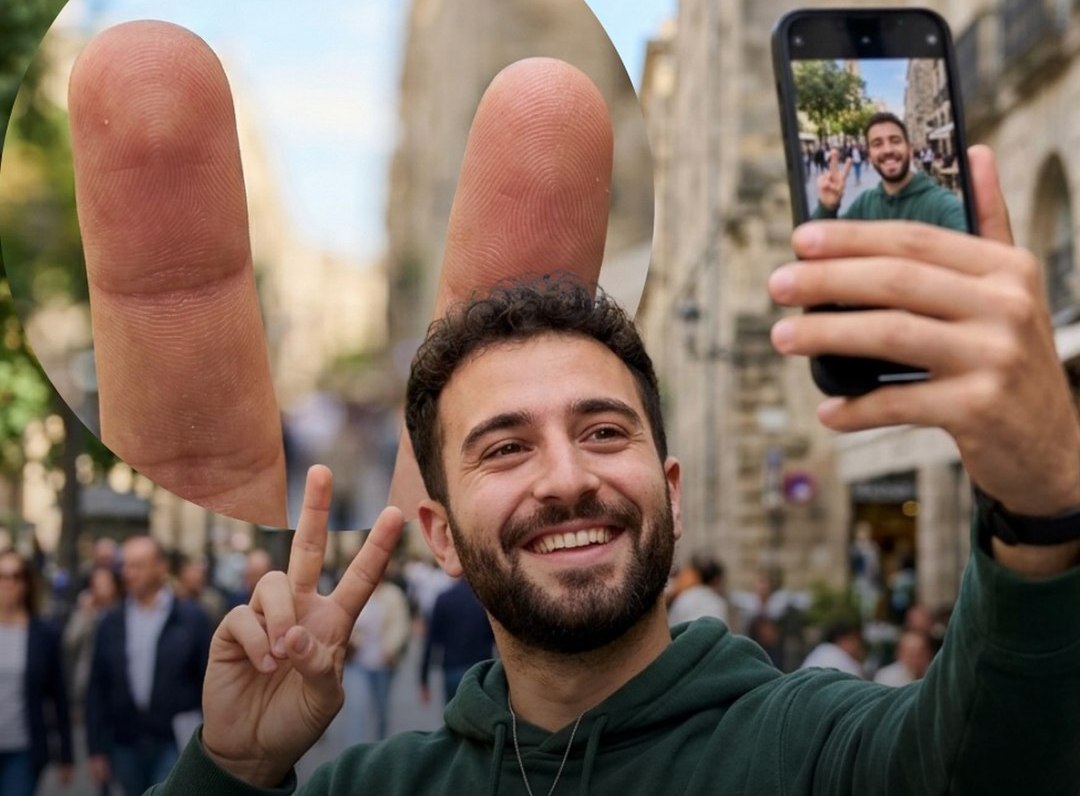
Cybersecurity experts have warned that advances in artificial intelligence could make it possible to extract people’s fingerprints from ordinary selfies and photographs — a development that is raising new concerns about privacy and digital security.
According to published reports, high-resolution images in which fingers are visible at a distance of less than 1.5 meters from the camera may capture enough detail of fingerprint patterns to be exploited.
Specialists say cybercriminal groups can use artificial intelligence technology and image-processing tools to reconstruct these details and create digital replicas of a person’s fingerprints.
Experts note that as biometric identification systems become more widely used — including fingerprint locks on smartphones, banking systems, and security facilities — the risk of misuse of biometric data is also increasing.
Unlike passwords, which can be changed, fingerprints are permanent human characteristics, making them far more difficult to replace or recover once compromised.
This concern is not entirely new. In 2021, security researchers demonstrated that with only a clear image of a fingerprint, image-editing software, a laser printer, and even wood glue, it was possible to create a fake fingerprint capable of deceiving some security devices.
Cybersecurity specialists advise users to be cautious when taking close-up photos, especially selfies in which palms or fingers are clearly visible. They also stress that technology companies should develop more advanced security systems to prevent the misuse of biometric data.
With the rapid growth of artificial intelligence, experts warn that cyber threats are becoming increasingly sophisticated, making the protection of personal information more important than ever.
Experts Warn About Fingerprint Theft From Selfie Photos