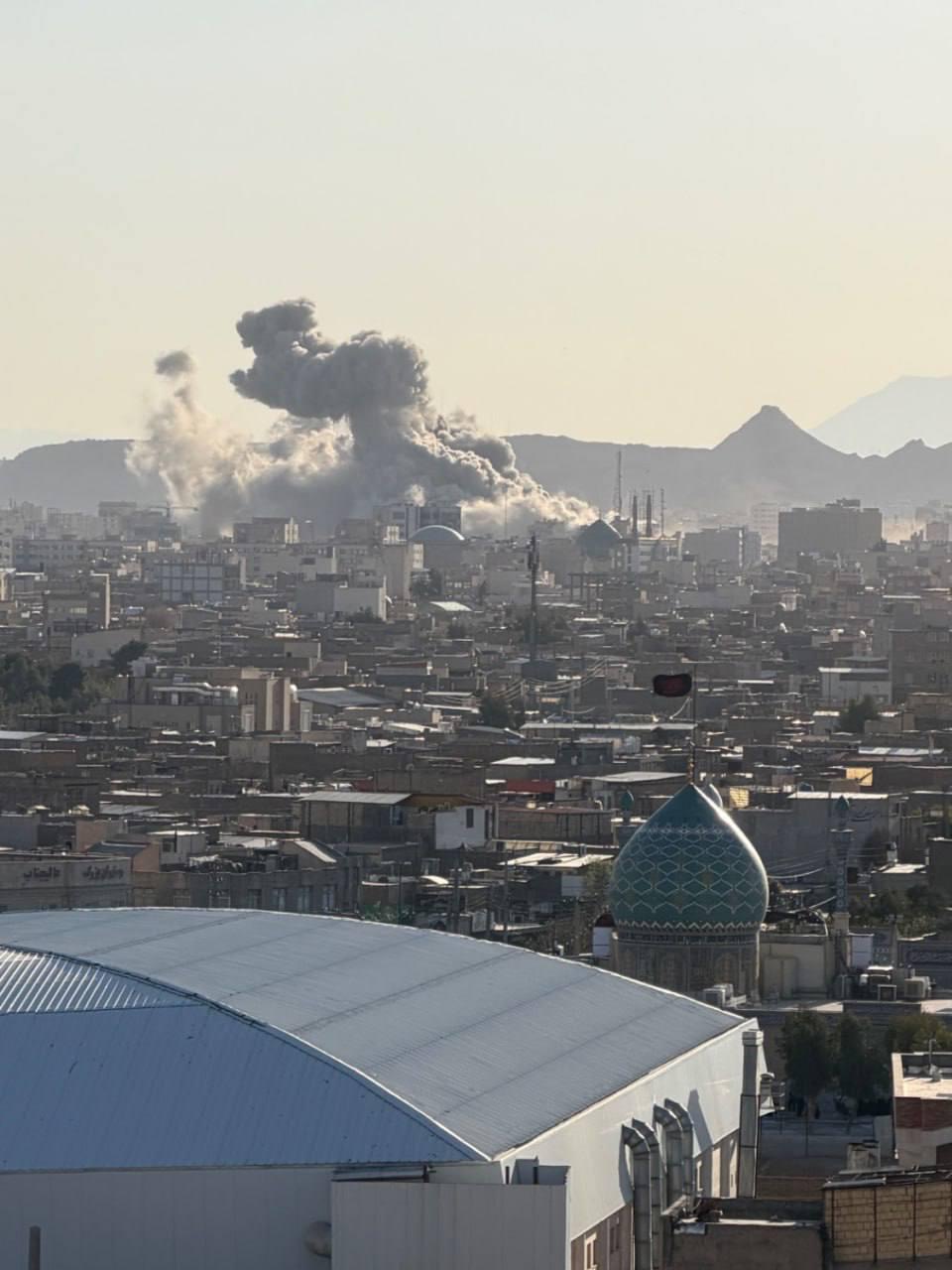
Deterrence in the Age of Advanced Missiles
And the Concept of Deterrence,
Deterrence means creating a situation where the enemy concludes that the cost of an attack is much greater than its potential benefit.
Deterrence is based on three pillars:
Initial Strike Power
Retaliation and Counterattack Power
Credibility of the Threat
In the Middle East, deterrence is based more on missile and drone power and depth of regional penetration.
The Geopolitical Equation of the Region
Main Players
Iran
United States
Israel
Arab Gulf States
Russia and China as Balancing Powers
Characteristics of this Equation
The United States has technological superiority, an extensive network of military bases and multilayered defense systems.
Iran focuses on asymmetric deterrence; that is, using tools that increase the cost of conflict for the enemy.
Israel has advanced defense systems and rapid reaction capabilities.
Is the number of missiles decisive?
In today's wars, it is not just the number of weapons that matters. More important factors are
Accuracy of hit
Ability to bypass defense systems
Speed of decision-making
Command coordination
Production capacity in the event of a prolonged war
Sometimes having a limited but effective number creates more deterrence than having a large but ineffective number.
Information warfare and public opinion management
Today, part of deterrence is related to managing the enemy's mind.
The release of large statistics on weapons production may be part of psychological warfare. In many cases, accurate information is not made available to the public and some of it is released with the aim of influencing public opinion.
Historical comparison
In World War II, it was observed that the final victory did not depend only on initial military power; industrial capacity, economic power and national endurance played a decisive role.
In the early stages, Germany relied on speed and surprise; but in the end, the industrial and economic power of the Allies created an advantage.
Possible scenarios of regional conflict
1. Limited and controlled conflict
2. Indirect conflict through regional actors
3. Short-term direct confrontation
4. Prolonged and attritional war
The greatest risk for all parties is in the fourth mode; because it erodes the economy and internal stability.
The grand strategic framework
To truly assess the balance of power, five axes must be examined:
Economic power and resilience to sanctions
Domestic cohesion and stability
International relations and alliances
Information and cyber power
Military readiness and flexibility
A country that relies only on weapons but is economically or socially vulnerable will have difficulty in a long conflict.
Finally,
Regional deterrence is a combination of military power, economic power, information management and internal cohesion.
The number of missiles alone does not determine the fate of the war.
Ultimately, the side that is able to manage resources, maintain national morale and use political and military tools wisely will have the upper hand.
Deterrence in the Age of Advanced Missiles And the Concept of Deterrence,